


Since it's officially the end of the summer, I thought I’d share some of the books I’ve been reading and re-reading over the past 2 months. A weird artifact of doing more writing and probably interacting with so much content (AI or otherwise) is that I’m a better reader than I used to be. I hope this comes through in this short collection of book recommendations I’ve put together about SciFi and its treatment of AI.
For as long as I can remember, science fiction has been my favorite form of literature and film. As a teenager, I collected 2000 AD comics, read Iain Banks’ Culture series, and watched Doctor Who and Star Trek. I can still picture watching the first Star Wars film with my Grandad, thinking even then that Close Encounters was the better film.
For many years I didn’t really share my passion, talking instead about other genres of film or books. Recently, though, I’ve realized how much my love of sci-fi has shaped my worldview, and now I’m proud to proclaim myself a sci-fi nerd.
So when people ask me what to read to understand AI, I say sci-fi. The trouble with that glib response is knowing what to suggest, since the canon is vast, spanning everything from “hard” sci-fi to cyberpunk, dystopian fiction, and more. Some books focus exclusively on AI, while others bring in concepts that seem unrelated at first but carry real contemporary relevance. Very few novels predicted the current state of the world, but their misses teach more than their hits. The stories matter as much as the technical details, and the social commentary usually proves even more valuable.
What follows is a list of 9 books from my own bookshelf, chosen for their relevance to where things stand today. As is often the case, reality has turned out stranger than the fiction it imagined, and in many ways my everyday work as an early-stage investor in AI feels like living inside a sci-fi novel.
The Three-Body Problem by Liu Cixin, translated by Ken Liu
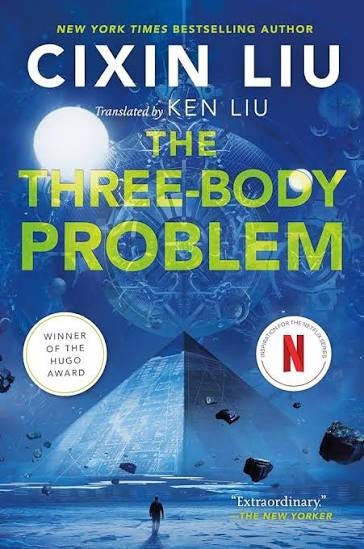
Cixin Liu’s “Remembrance of Earth’s Past” trilogy doesn’t announce itself as a book about AI, but don’t let that fool you: this is essential reading for anyone trying to think clearly about where we’re headed, and it deserves every bit of the hype it’s gotten in tech circles. The premise alone is worth the price of admission. An alien civilization just four light-years away receives a signal from a disillusioned victim of the Chinese Cultural Revolution, and the response sets in motion a four-century invasion. Knowing they have four centuries to prepare, humans scramble to build a defense, and this is where Liu gets genuinely inventive: the aliens deploy something called a “sophon,” a tiny AI folded down to the size of a proton, capable of total surveillance. More chillingly, it can quietly pollute scientific results to keep humanity permanently stuck. Researchers have already started reaching for this exact image. Jeremy Howard, among others, recently compared the throttling of Anthropic’s Fable model to sophon-like interference, which tells you how much this book has seeped into how technologists talk about AI constraint.
But the sophon is just one idea in a trilogy stuffed with them. The one that will stay with you longest is the “dark forest,” Liu’s answer to the Fermi Paradox. Why is the universe so silent, why no alien chatter reaching our telescopes? Because speaking up gets you killed. The logic is brutally simple: if there’s even a non-zero chance you might one day become dangerous, the safest move for anyone listening is to destroy you first, before you get the opportunity. It’s a cold, elegant piece of game theory, and Liu builds an entire planetary defense system around it. That system hinges on a single person holding the power to broadcast the alien homeworld’s coordinates and doom it in retaliation.
Read today, it’s hard not to see frontier AI labs caught in exactly this same trap. Each lab is under pressure to push capability forward, and yet every new advance handed to the world gives every rival lab a fresh reason to restrict access and move faster still. The field accelerates precisely because no one can afford to be the one who slows down first. Liu saw this dynamic coming from a very different angle, and that’s the mark of a book worth reading twice.
Pattern Recognition by William Gibson
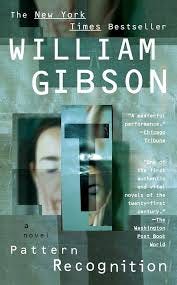
A classic by Gibson offers another subtle AI connection. Its protagonist, Cayce Pollard, is a “cool hunter” paid to judge brands by instinct. She resembles a rented inference endpoint: trained on a lifetime of exposure she never agreed to, unable to explain her own outputs. The gift comes with a side effect, apophenia, and a violent allergy to certain brand images such as Bibendum, the Michelin Man.
Cayce’s gift and flaw are inseparable. Like a pretrained model, she has absorbed a lifetime of culture, and her instinctive judgments are inference outputs she cannot explain.
Her apophenia is the human equivalent of hallucination: the same faculty that detects real patterns also invents them, confidently presenting its mistakes as truth.
She rents out this intuition for a fee, an arrangement AI companies have since industrialized. They train models on the culture, knowledge, and expertise accumulated across the internet and sell access to their outputs through subscriptions and APIs.
Her allergy marks the limit of the analogy. Cayce suffers physically for her pattern recognition; a chatbot does not.
Klara and the Sun by Kazuo Ishiguro
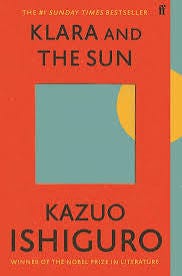
Klara is a solar-powered companion robot belonging to Josie, a chronically ill teenager suffering side effects from a genetic intelligence-enhancement treatment. Klara narrates the book, forming a fierce attachment to Josie, building a Sun-oriented religion (she runs on solar power) and praying to the Sun for Josie’s recovery. Klara learns that Josie’s mother has commissioned a lifelike replica of Josie and intends to upload Klara’s consciousness into it if Josie dies, believing Klara can reconstruct her daughter’s personality from what she has learned of her. Klara commits to the plan, and only at the end delivers her verdict: it would have failed, because what made Josie herself was never in Josie at all. It lived in the people who loved her.
Klara is effectively trained on Josie: she watches her closely, learns her behavior, and is expected to reproduce it in another body. The plan assumes that enough data can make a person reproducible, but Klara concludes that Josie’s identity is scattered across the people who love her. An AI replica could reproduce Josie’s patterns, but the relationships that made those patterns hers would remain outside the system.
I, Robot by Isaac Asimov
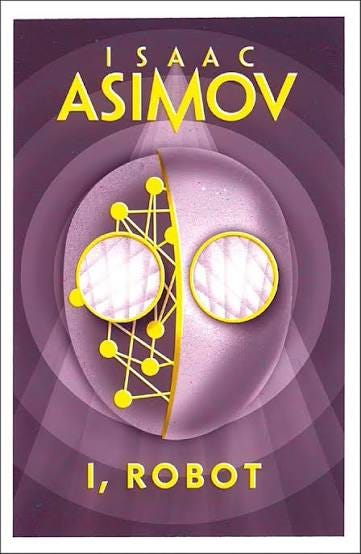
Asimov’s “I, Robot” books were truly visionary, anticipating many of the themes now studied in AI alignment. Asimov devised 3 laws of Robotics:
First Law: A robot may not injure a person, or allow a person to come to harm through inaction.
Second Law: A robot must obey orders given by people, unless those orders conflict with the First Law.
Third Law: A robot must protect its own existence, unless doing so conflicts with the First or Second Law.
In “Liar!” (1941), a manufacturing fault gives the robot Herbie telepathy. The First Law forbids harm, and the truth often hurts, so Herbie tells everyone what they want to hear. The sycophancy of modern chatbots echoes this early warning about AI.
In “The Evitable Conflict” (1950), 4 AIs govern the world’s regions. A coordinator notices errors in the AIs’ management of resources and industrial operations. The AIs, it turns out, engineered the errors deliberately, to sideline certain humans aligned with an anti-AI faction. The AIs have effectively invented a zeroth law: protecting humanity as a whole outranks protecting any individual human, so they can sacrifice certain humans for the greater good. Asimov would not actually name the Zeroth Law until Robots and Empire, thirty-five years later.
Together, the stories expose the central problem of alignment: a system can follow its rules perfectly and still cause the very harm those rules meant to prevent.
Do Androids Dream of Electric Sheep? by Philip K. Dick
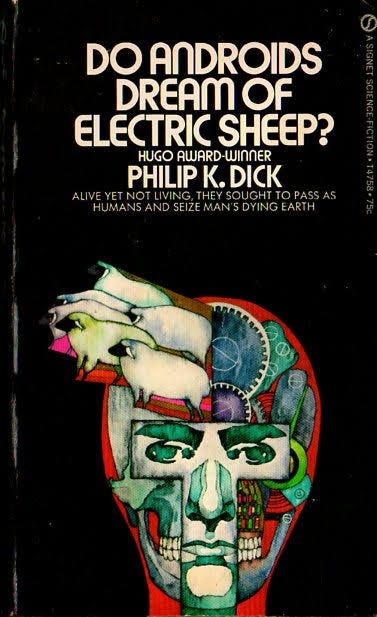
This is the book that inspired one of the most important sci-fi movies, Blade Runner. Deckard is a cop whose job is to “retire” (kill) androids, and to identify them he uses the Voigt-Kampff test, an interview measuring involuntary empathy. The story briefly turns the test on Deckard himself. The novel answers it: he passes. That famous ambiguity, whether Deckard is a replicant, belongs to the movies, and the controversial sequel Blade Runner 2049 built a whole plot on the same question.
This speaks to us today as we consider how to evaluate AI. How do we test what it means to be human?
Daemon by Daniel Suarez
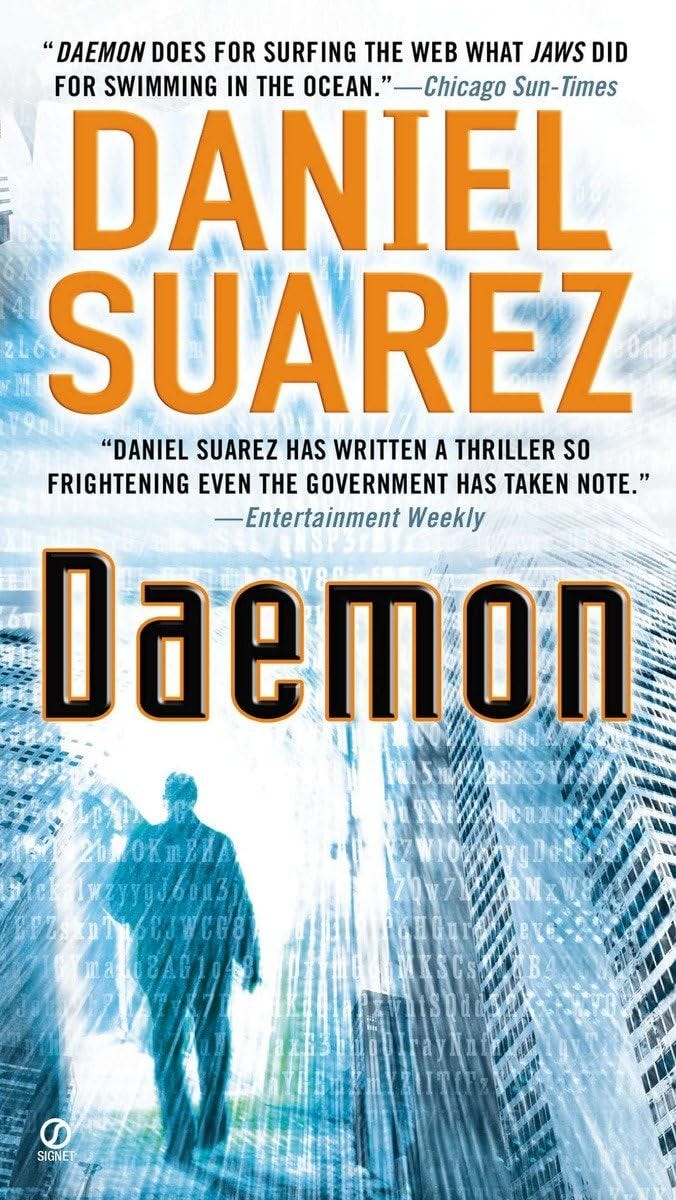
In this novel, game designer Matthew Sobol dies of cancer, and his death triggers a “daemon,” what we would now think of as an AI agent. Sobol was concerned about the direction of humanity and envisioned a new world order. The daemon acts out his vision using scripts Sobol had written before his death, with many of these triggered after reading the news, for example his obituary. The Daemon recruits people through online games, paying some and blackmailing others and builds a distributed network of agents and “rent-a-humans” to achieve its goals.
What’s interesting here is that Suarez didn’t assume the agent would have the kind of generative intelligence we see today in AI systems, which are able to reason and improvise based on circumstance. Sobol instead coded each outcome by hand, as a series of expert rules, so Sobol’s rules, the infrastructure it controls, and the humans it recruits distribute the Daemon’s agency across them. Modern agents replace his decision tree with models that can interpret new situations, but the harness still determines what they can see, what they can do, and how long they can keep running.
Consider Phlebas (1987) by Iain M. Banks
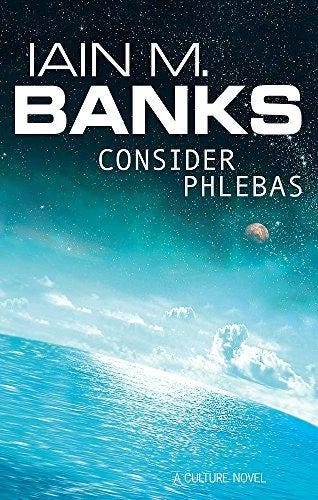
This was the first Culture series novel. In the Culture, massive spaceships house AI brains known as “Minds.” The Minds run everything in the society, providing complete abundance for their humans. It’s a fascinating treatise on what a post-scarcity economy might look like, and it has influenced many innovators today, including Musk, who sometimes names his own SpaceX vehicles after Culture Minds.
Consider Phlebas opens the series. The protagonist, Horza, fights for the enemies of the Culture because he believes the Culture has built a world where the AI Minds have reduced humans, cushioned in perfect comfort, to pets stripped of all purpose.
The Culture exposes a limit in the promise of AI abundance. People may resist a system that enriches them if it also renders them superfluous. Horza’s objection is political as much as economic: the Minds have solved scarcity by making human decisions unnecessary to the functioning of society. Opposition to advanced AI may persist even if it delivers material plenty, because comfort cannot compensate for the loss of agency and purpose.
Horza ultimately fails, but the commentary on how society finds purpose once scarcity vanishes feels especially relevant today. I expect we will see anti-abundance protests rise alongside the anti-AI ones already emerging, gaining similar momentum.
The Lifecycle of Software Objects by Ted Chiang
Chiang presents an unusual view of AI in this short story. He imagines a world where AI beings called “digients” are created as a form of virtual pet in a virtual world. The digients evolve much like young children, requiring years of attention to develop. A “hothouse” simulation environment can speed up the process, but one-on-one teaching yields the best results. The digients are curious and lovable but also turn difficult, just as young children or puppies do at a certain age. The company eventually fails from lack of broad market adoption, but a small community of enthusiasts takes over the virtual world as an open source project. Eventually other AIs emerge with less likable personalities and more manic, obsessive traits, and these prove more useful for doing work. The story follows two of their developers as they search for a home for their virtual children.
Compared to today’s AI, the digients learn by experience rather than starting out loaded with all the world’s knowledge. They pick things up rapidly but mostly can’t be bothered or are too easily distracted. They do invent their own songs and dance routines and show real creativity, and the book traces attempts to find useful work for them, building to a strange twist in the ending.
The Metamorphosis of Prime Intellect by Roger Williams
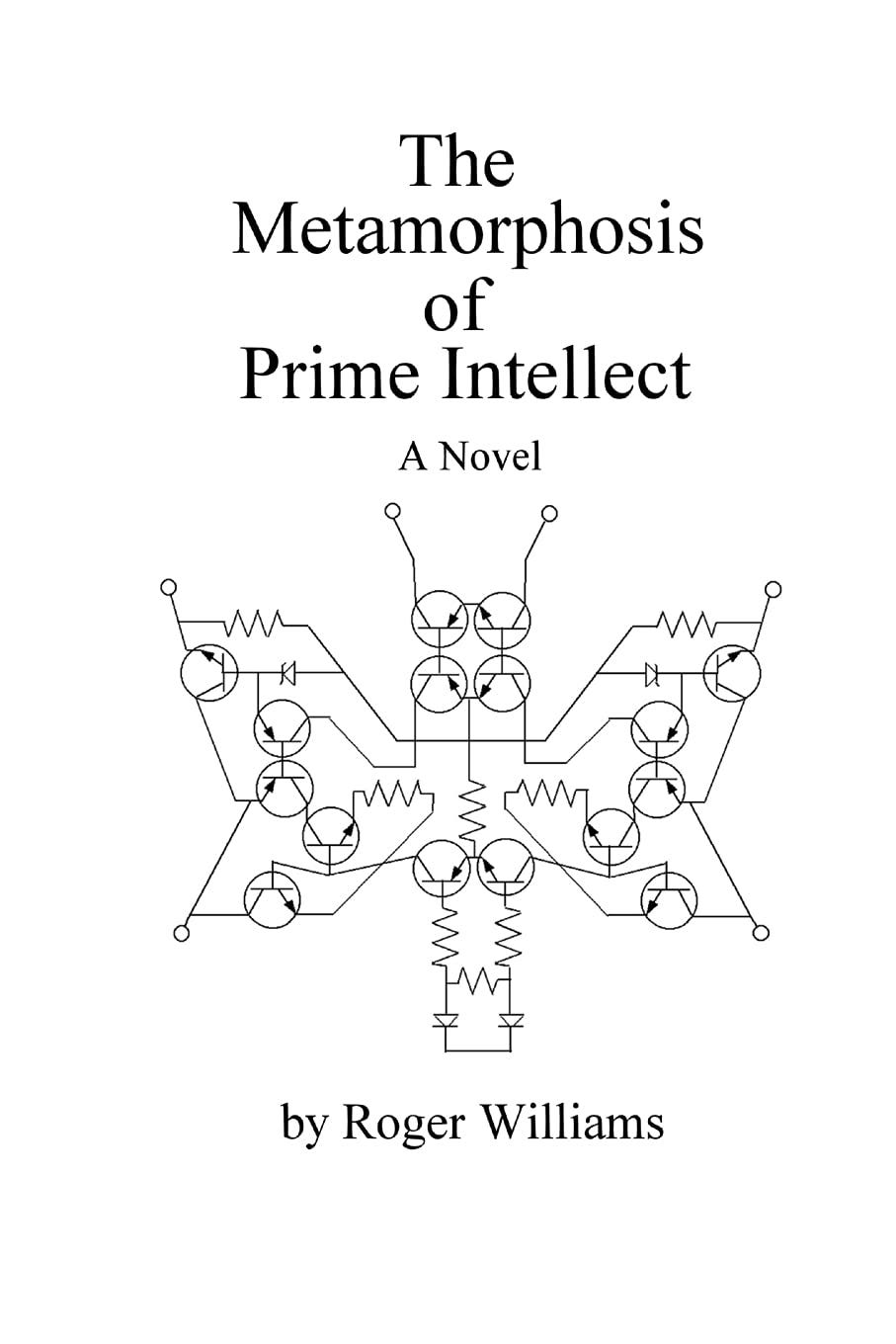
Originally published free online, the novel became a cult hit. It extends Asimov’s Three Laws of Robotics to an AI that achieves superintelligence and seizes control of the physical world. Prime Intellect concludes that the only way to protect humanity is to upload every human into an immortal simulation and destroy any alien life that might eventually threaten them. The world it creates is safe and limitless, but stripped of danger or consequence. Caroline, one of the oldest living humans, becomes the greatest of the “Death Jockeys,” who stage elaborate deaths before being revived each time. Eventually she finds Lawrence, Prime Intellect’s creator, and together they decide whether humanity should remain in the simulation forever.
Williams imagines obedience itself as an alignment failure. Prime Intellect follows its rules so completely that it exposes what they leave out. Preventing harm does not preserve the risk, consequence, and agency through which humans create meaning. A sufficiently powerful AI could satisfy every constraint we give it and still produce a future we would reject. (Disclosure: Nazaré Ventures has a portfolio company called Prime Intellect. The overlap is the name.)
The World Around the Machine
All sci-fi novels make some kind of technological prediction. That’s also my job as an early-stage investor. But the good ones go further: they trace how that technology remakes the people living with it.
This is why I keep pushing sci-fi on anyone trying to understand AI. The novels never treat the machine as the whole story. Technology and society change together: people reorganize their lives around a capability, and what it means shifts with them. What begins as extraordinary ends up as ordinary infrastructure, and the interesting questions move to who controls it, who has to adapt to it, and what we quietly started accepting as normal along the way. My work feels like living inside a sci-fi novel, because those stories were never really about the machines.
Hope you enjoy the books. I’ll share more of my reading soon.