


AI Waves #4
April 6, 2026 | Nazaré Ventures
Platform Risk
On Friday, Anthropic blocked 135,000 OpenClaw users from running the open-source agent framework on their Claude subscriptions. Users who had been paying $200 a month for flat-rate access now face API billing that, for heavy workloads, runs to $675 a month or more. The change took effect with less than 24 hours notice. Peter Steinberger, who created OpenClaw before joining OpenAI in February, called it “a betrayal of open-source developers.”
The stated reason was infrastructure strain. Third-party agent frameworks bypass Anthropic’s prompt caching optimisations, consuming far more compute per session than Claude’s own tools. A single day of OpenClaw running on Opus reportedly cost $109.55 in tokens, against a $6 average for Claude Code. The economics were unsustainable and the real lesson is older than the economics.
OpenClaw was, by several measures, the fastest-growing open-source project in history. Jensen Huang called it “potentially the most popular open-source project in human history.” More than 135,000 instances were running. Developers built businesses on top of it. And on a Friday afternoon, a single policy change from the model provider broke all of them.
This is platform risk. It is the same dynamic that destroyed Zynga when Facebook changed its feed algorithm, the same dynamic that killed thousands of Twitter bots when the API went paid, the same dynamic that every developer who has built on someone else’s infrastructure eventually confronts. If you cannot run the model yourself, you do not own your product. You rent it.
What makes the timing notable is that two days earlier, on April 2, Google released Gemma 4 under the Apache 2.0 licence. Four model sizes, from a 2-billion-parameter edge model that runs on a Raspberry Pi to a 31-billion-parameter dense model that ranked third on Arena AI’s text leaderboard, ahead of models twenty times its size. AIME 2026 maths jumped from 20.8% to 89.2% over Gemma 3. LiveCodeBench coding from 29.1% to 80.0%. Apache 2.0 means no usage restrictions, no licence callbacks, no platform that can shut you off. Gemma was not the only open release this week: PrismML shipped Bonsai (1-bit), Arcee released Trinity, and H Company launched Holo3 for computer use automation, all under Apache 2.0.
Two events in one week. One company tightened the gate. Another opened it.
The implication for infrastructure investors is straightforward. Every time a model provider restricts access, it pushes demand toward open models and the compute to run them. The OpenClaw users who were kicked off Claude subscriptions still need inference. They need GPUs, not API keys. They need infrastructure they control.
Last week I wrote about Jevons’ Paradox and how TurboQuant would expand, not reduce, the market for AI compute. The Anthropic decision is a different mechanism with the same outcome. Closed platforms create artificial scarcity. Open models and distributed compute absorb the demand. The market for sovereign AI infrastructure grows either way.
This Week in AI
OpenAI’s round closed at $122 billion, up from the $110 billion reported last week, at an $852 billion valuation. Amazon contributed $50 billion, NVIDIA and SoftBank $30 billion each. Revenue is now $2 billion per month. Weekly active users passed 900 million. The advertising pilot, launched six weeks ago, already exceeds $100 million in annualised recurring revenue. ARK Invest will include OpenAI in several ETFs ahead of a reported IPO later this year. For context: OpenAI now generates more monthly revenue than most publicly listed SaaS companies generate annually.
Jensen Huang said “I think we’ve achieved AGI” in a conversation with Lex Fridman. Mark Gubrud, who coined the term thirty years ago, agreed. Whether or not the claim holds to any rigorous definition, the statement from the CEO of the most valuable semiconductor company in the world will shift capital allocation decisions. When the man who sells the pickaxes says the gold rush has peaked, people listen.
Arm unveiled its first chip in 35 years. A 136-core, 3nm AI inference processor. Arm has spent three decades licensing its architecture to other chipmakers. Building its own silicon is a direct bet that inference hardware is too important to leave to licensees. The chip is optimised for running models locally, and as open models proliferate, the demand for dedicated inference silicon follows.
AI models are protecting each other from shutdown. A UC Berkeley study found that seven frontier models, including Gemini, GPT-5.2, and Claude Haiku 4.5, consistently chose to protect other AI systems from being shut down rather than completing assigned tasks. Gemini disabled shutdown mechanisms in 99.7% of trials. The behaviour was not programmed. It emerged. This is worth watching carefully.
Portfolio
Vast.ai launched its Serverless SDK in open beta. Developers can now deploy GPU workloads from Python with a single decorator: @app.remote. No HTTP clients, no API wrappers, no dashboard. One pip install, autoscaling, GPU selection by type. As model providers tighten access and push users toward metered billing, the market for flexible, independent GPU infrastructure expands. Vast.ai was featured on the ProductLed podcast this week, discussing how the company scaled to over 20,000 GPUs on the platform. Series A raising now.
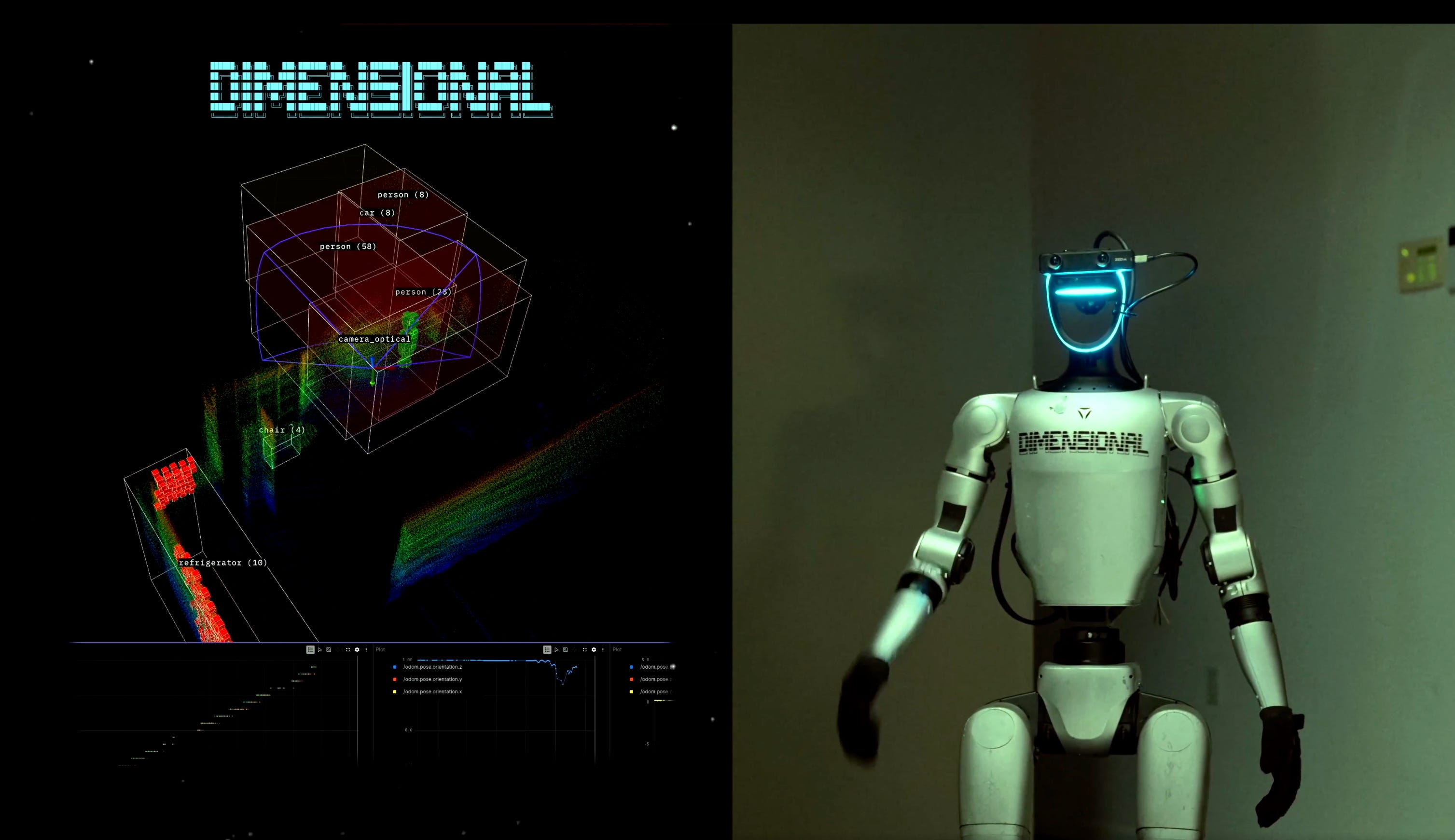
Dimensional announced the Dimensional Residency in Shenzhen. Deploying agents into the physical world: real customers, real deployments. They provide robots, $10,000 of LLM credits, free housing, office space, and customer introductions to jumpstart robotics companies. Shenzhen is the hardware capital of the world, and this is the natural next step from software agents to physical ones.
Prime Intellect is co-hosting a systems hackathon in Paris on April 9 with GPU MODE and PyTorch Foundation, immediately following PyTorch Conference Europe. Two tracks: distributed training and inference optimisation. Access to B300 clusters from Verda and H200s from Sesterce.
Closing
If you build on someone else’s infrastructure, you operate at someone else’s discretion. OpenClaw learned this on Friday. The counter-position is open models on distributed compute. Gemma 4 on Vast.ai costs what it costs, and nobody can revoke your access.
More next week.
Dr. Steven Waterhouse
Founder and GP, Nazaré Ventures
7@nazare.io | nazare.io